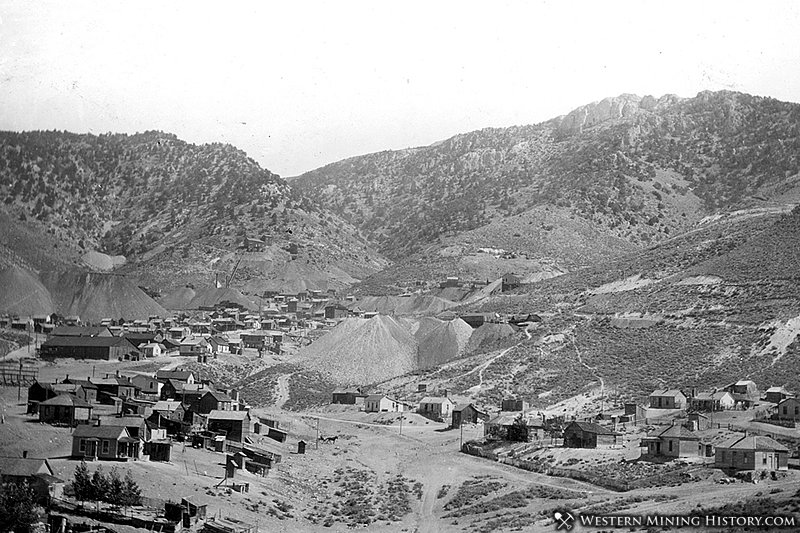
Originally called Ruby Hollow, the settlement became known as Eureka in 1870 with the establishment of a post office.
Eureka became the center of supply, finance, and government for the Tintic mining district, a gold and silver district that was one of Utah’s most important mining centers.
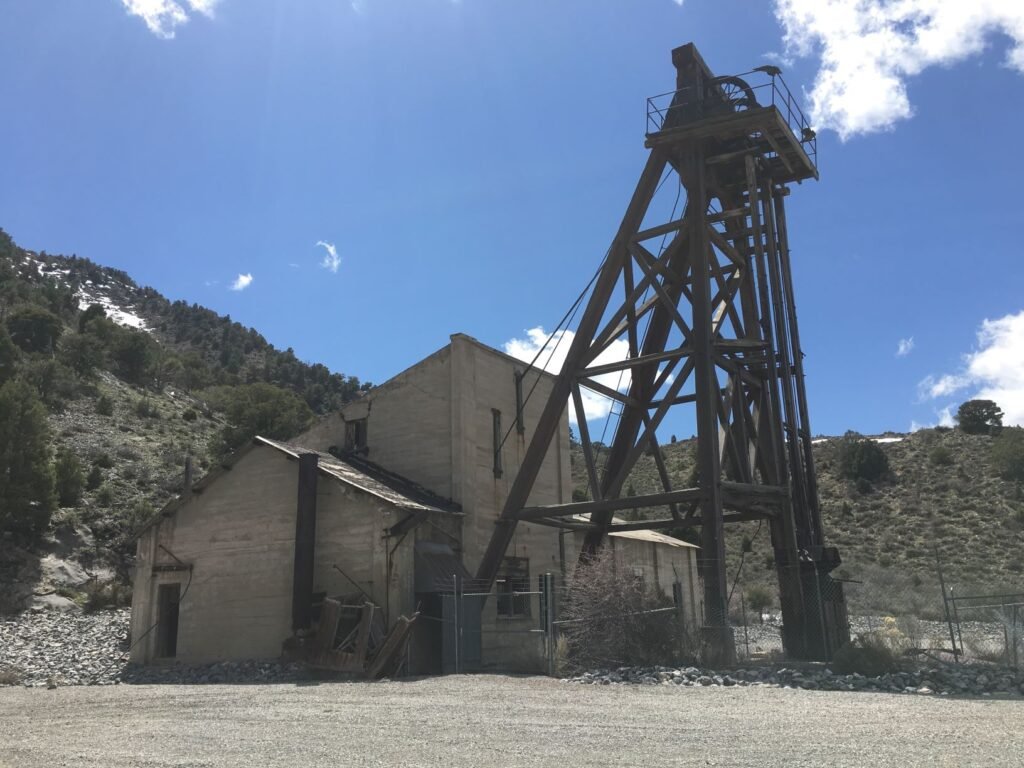
The “Big Four” mines – Bullion Beck and Champion, Centennial Eureka, Eureka Hill, and Gemini, supported a population of well over 5,000 people in Eureka.
Tintic is one of Utah’s oldest, richest, and longest lived mining districts. At the turn of the century, Eureka still had over 3,000 residents.
In 1909 James Cash Penney opened his second “Golden Rule” store, and used this location in Eureka as a base of operations for expanding his business into what became known as the J.C. Penney chain of department stores.
Eureka remained prosperous in the the 1910s, with over 4,000 residents by 1912 and 112 businesses.
Although mining had hit a downturn across the country following World War I, the Tintic district persevered and by 1922 the Chief Consolidated Mining Company was the largest silver producer in the United States.
Like most of America, Eureka languished in the 1930s as a result of the Great Depression. The mines continued to produce but on a more limited scale. By the 1950s most major mining activity had ceased.
In 1979, Eureka was placed in the National Register of Historic Places as part of the Tintic Mining District Multiple Resource Area, recognizing the importance of remaining buildings and sites.
good read!
Yep! My husband is the best tour guide ever😘